Skip to content
  • Home
  • California Odyssey Project & Dust Bowl Migration Archives
  • Exhibits
  • Kern County Collective Memory Project
  • Photo Collections
  • Kern County History
Back Home
Historical Research Center | CSU Bakersfield
  • Home
  • Collections & Resources
  • Exhibits
  • CSUB Faculty Hall of Fame
  • Courses
  • Education
  • About Us
  • Contact Us
  • Search
Back Home
Historical Research Center | CSU Bakersfield
  • Home
  • Collections & Resources
  • Exhibits
  • CSUB Faculty Hall of Fame
  • Courses
  • Education
  • About Us
  • Contact Us
Home » Celebrating Black Heritage: » Photographs

Photographs


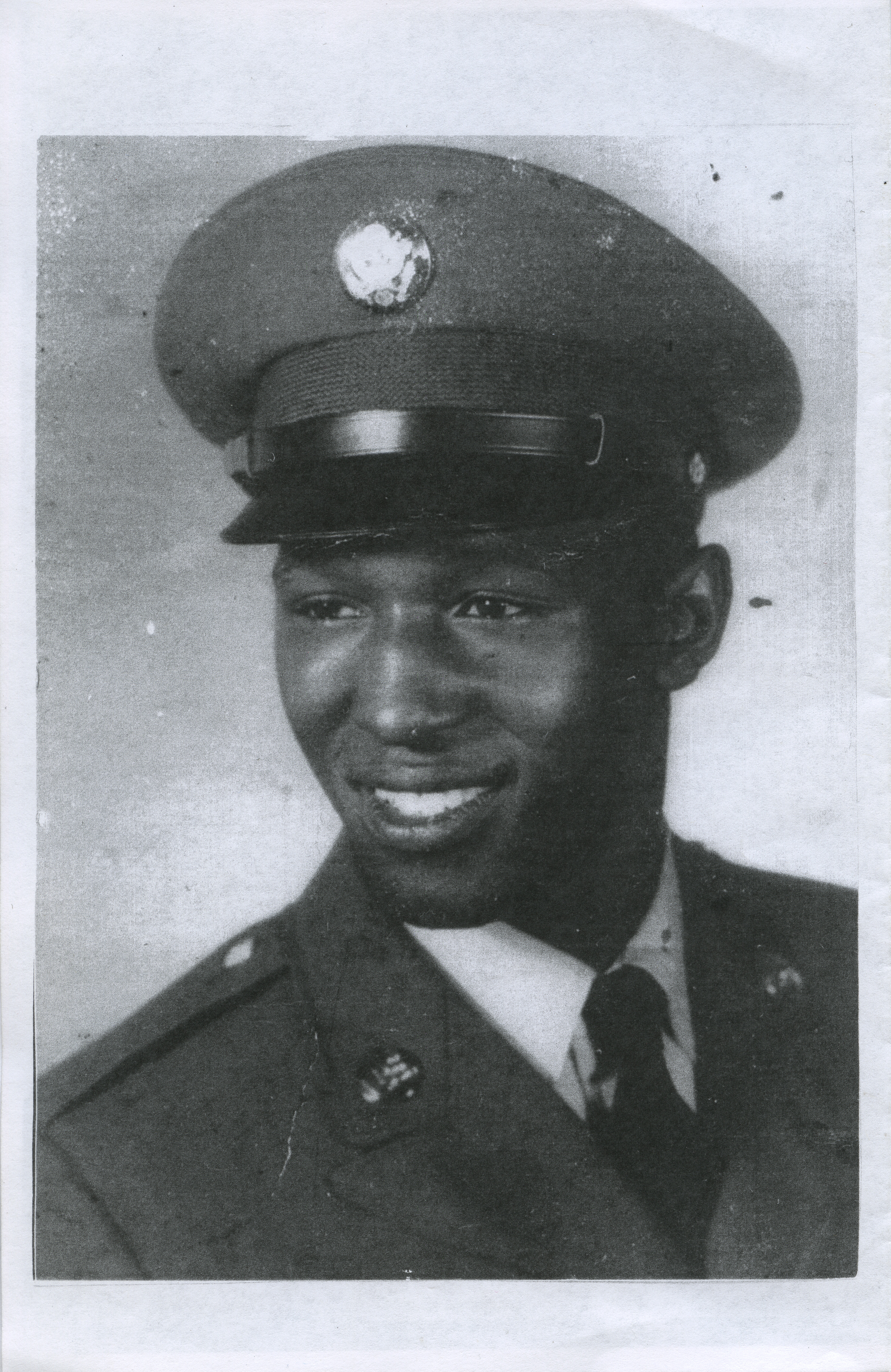
Image of Mr. Colbert, The photograph depicts an African American serviceman in dress uniform, including a peaked service cap bearing an insignia and a formal jacket with lapel pins and shoulder insignia. The style of the uniform suggests U.S. Army service, likely during the World War II or immediate postwar era, although no date is visible. African American men served in segregated units of the U.S. Armed Forces through World War II, including in the Army, Army Air Forces, Navy, and Marine Corps. Their service occurred within the broader context of racial segregation in the military and the “Double V” campaign—victory against fascism abroad and racism at home. Military service often became a catalyst for postwar civil rights activism, educational opportunity through the GI Bill, and increased community leadership. Studio portraits such as this were commonly taken for family keepsakes, identification records, or commemorative purposes. As a historical artifact, the image documents African American participation in national military service and contributes to the broader history of race, citizenship, and military integration in the United States.
Colbert Family
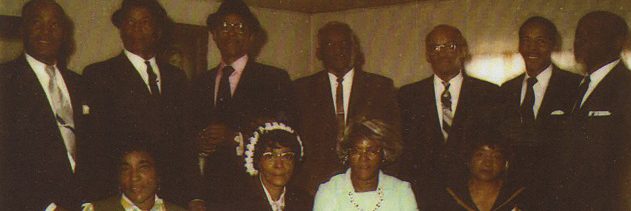
Group photo, The photograph shows a multigenerational group of African American men and women arranged in two rows, likely at a formal event. The men wear dark suits with ties, some with glasses and lapel pins, suggesting possible organizational or commemorative significance. The women in the front row are dressed in formal attire, including decorative hats and coordinated outfits, which may indicate church affiliation, anniversary celebration, family reunion, civic organization event, or fraternal auxiliary gathering. The indoor setting appears modest, possibly a community hall, church fellowship room, or private residence. The coordinated dress and posed arrangement suggest the photograph was taken to commemorate membership, leadership, or a milestone event. Such group portraits are common in African American community history, documenting networks of civic engagement, religious leadership, mutual aid societies, veterans’ organizations, and extended families. These images serve as important records of social cohesion, leadership structures, and community presence, particularly in regions where African American communities navigated segregation and limited public representation.

Jackson Family

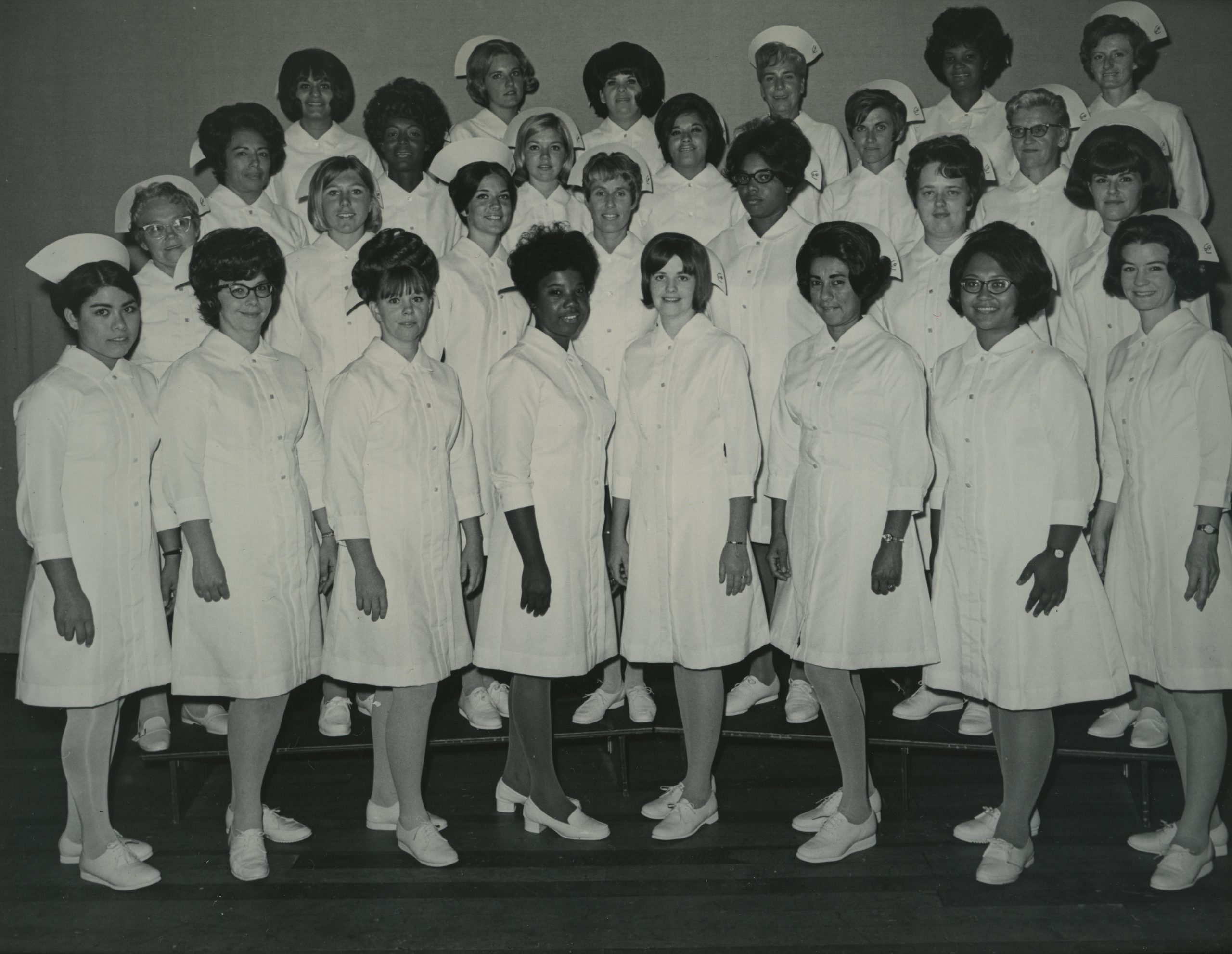
Rayson Family, The photograph shows approximately two dozen women arranged on risers in three rows. They wear uniform white dresses with buttoned fronts, white hosiery, white shoes, and traditional nurse caps, suggesting affiliation with a nursing school or hospital training program. Hairstyles and uniform style suggest a mid- to late-twentieth-century date. The group is racially diverse, including women of different ethnic and racial backgrounds, indicating the gradual integration of nursing education programs during and after the civil rights era. Nursing was one of the primary professional fields open to women throughout the twentieth century, and formal group portraits were commonly taken to commemorate graduating classes or cohorts. The staged composition and standardized dress underscore the discipline, professionalism, and collective identity associated with nursing education. Such images serve as documentation of women’s expanding roles in the healthcare workforce and the institutional history of medical training programs.
Rayson
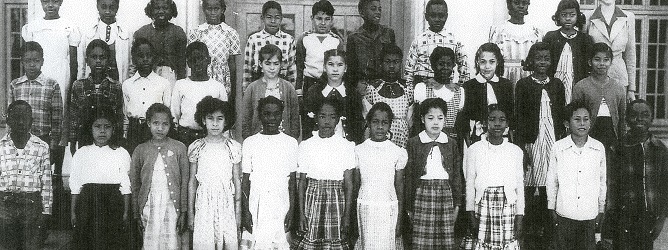
School photo, The photograph shows approximately three rows of children standing on steps in front of a building, possibly a school entrance. The children wear a mix of patterned dresses, skirts, button-down shirts, and collared tops, suggesting an informal but organized school setting. Their arrangement in rows and the formal pose indicate an official class photograph. The group appears racially diverse, reflecting either an integrated school environment or a community with multiple racial and ethnic groups. Depending on the date and location, such an image could represent early integration efforts following mid-twentieth-century desegregation rulings, or it may document schooling within a historically segregated but locally diverse community. School photographs serve as important historical records of educational access, demographic composition, dress norms, and childhood experiences within a given community. They also provide visual documentation of changing social dynamics in public education across the twentieth century.
Robinson Family
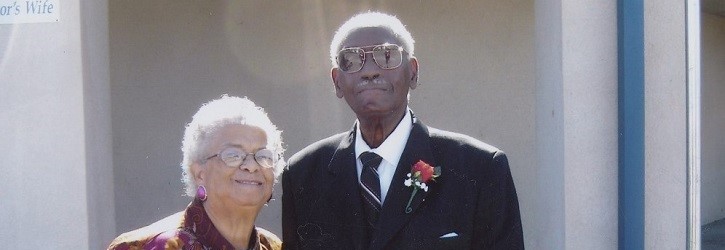
Reverend Toliver, The photograph shows an elderly African American couple posed side by side near what appears to be a building entrance. The man is dressed in a dark suit and tie, with a red boutonniere pinned to his lapel, suggesting a celebratory or ceremonial event. The woman wears glasses, earrings, and a coordinated outfit, indicating a formal occasion. The boutonniere and careful dress suggest the image may document a milestone event such as a wedding anniversary, church recognition, award ceremony, or special community observance. The presence of natural light and an exterior wall or doorway behind them indicates the photograph was likely taken just outside a church, community center, or event venue. Such portraits are common in family and community archives and serve as important documentation of generational continuity, community leadership, marital longevity, and participation in civic or religious life. They often mark significant life milestones and contribute to the preservation of local social history.
Toliver Family

CSUB LOGO

© 2026 Historical Research Center | CSU Bakersfield – All rights reserved

Powered by WP – Designed with the Customizr theme