Featured Collections
| Biographies |
Celebrating Black Heritage: Biographies
Johnie Mae Lothridge Parker

1908-1988
Community Involvement: Parker was deeply involved in her community through various roles, including church activities, PTA, and several clubs. She also served as the secretary for the local branch of the NAACP.
Civil Rights Movement: During her work in the civil rights movement, Parker had the opportunity to meet prominent figures like Martin Luther King Jr. and Rosa Parks.
Target Area Program (TAP): She played an integral role in the Target Area Program in Bakersfield, which aimed to combat poverty.
Education: Parker attended classes at Bakersfield College and the University of California, Santa Barbara (UCSB). She was also part of the teaching staff at the Bakersfield Adult School.
“How Long? Not Long! The Battle To End Poverty” (1987)
Pearl Lowery Winters
1882 – 1957
Presidential Performance: Pearl Lowery Winters was the first woman from Kern County to perform at a Presidential Ball in 1901. She sang for President William McKinley at his second inaugural ball, where he nicknamed her the “Nightingale of California” due to her beautiful contralto voice.
Community Involvement: Winters was involved in several community organizations, including the Red Cross, the United Service Organization, the Golden West Women’s Club, and the California State Federation of Colored Women’s Clubs.
Billy Haynes
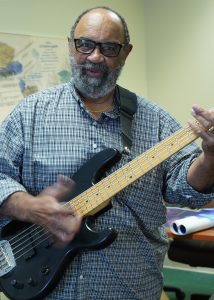
Billy Haynes (b. March 22, 1949, Los Angeles) is an American bassist, vocalist, and bandleader. Raised in Bakersfield, he began performing in the 1960s with local groups before founding The Original Souls, winners of the 1969 Lake Ming “Battle of the Bands.” He went on to tour extensively, becoming Tina Turner’s first solo bass player (1977–1981) and later performing with Lou Rawls. In the 1980s he formed Pressure Point, reaching the finals of Star Search, and became a sought-after bandleader in Hollywood. Haynes has shared stages with artists including Ray Charles, Chaka Khan, Etta James, and Ike Turner. Since the 2000s, he has lived in the Netherlands, leading the Billy Haynes Band and touring Europe with his “Feel Good Old School” R&B sound