Before 1938 – Braceros – Buying on Contract – Covenant Database
California Nativism – Citizenship – Covenants – East Bakersfield – Education – Eminent Domain
English Only – Japanese Internment – Moving into a Neighborhood – Neighborhoods – Public Housing
Resources – Rumford Fair Housing Act – Suburban Expansion – Zoning
Historians like Collin Gordon and Gene Slater have chronicled that these racial segregation practices and found that they were not necessarily unique but systemic when adopted by federal programs during the New Deal.
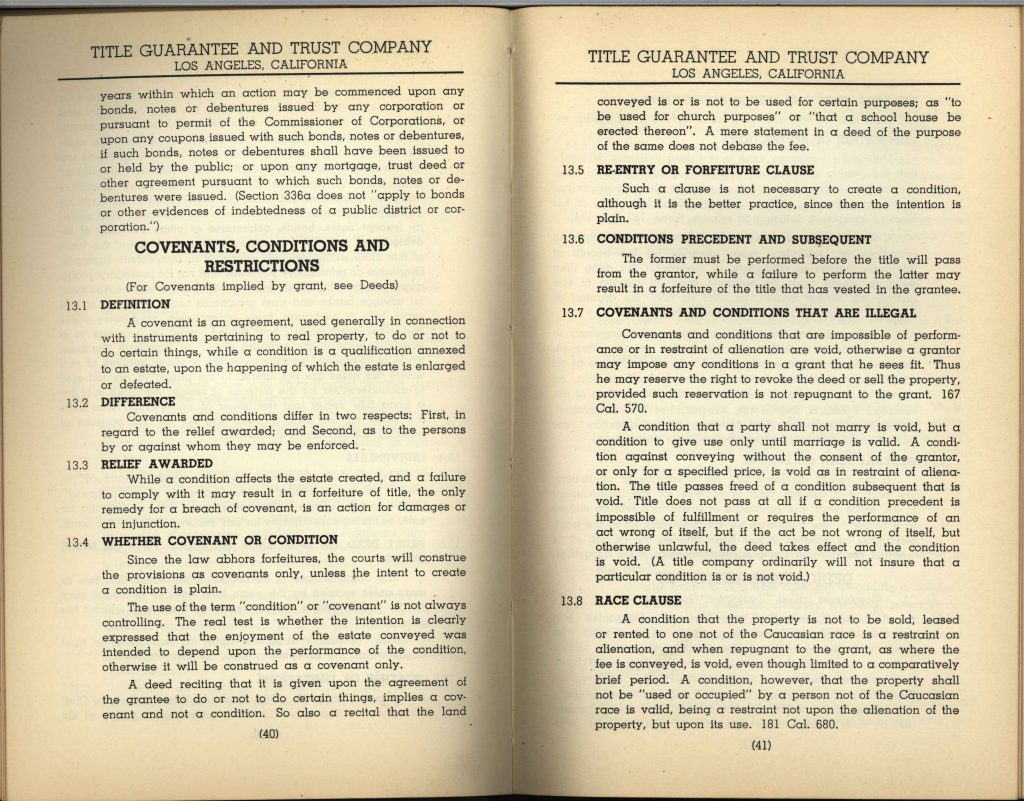
Land title books from the Bakersfield Abstract Company in 1929 and 1936, both encourage race restrictions and inform sellers on citizenship clauses, like the Alien Lands Act (1913), and the Chinese Exclusion Acts. Section 34 of the Land Titles: Titles and Guarantee and Trust Company, stated that, “Japanese, Chinese, Hindus, Malays, and possibly all Asiatics,” were not able to acquire, posses, transfer real property, because of citizenship and land exclusion laws. Furthermore, Section 35-42 goes into specific details about passing titles, who is capable of, and even expressing doubt of racial ownership, because of Alien Land Laws.
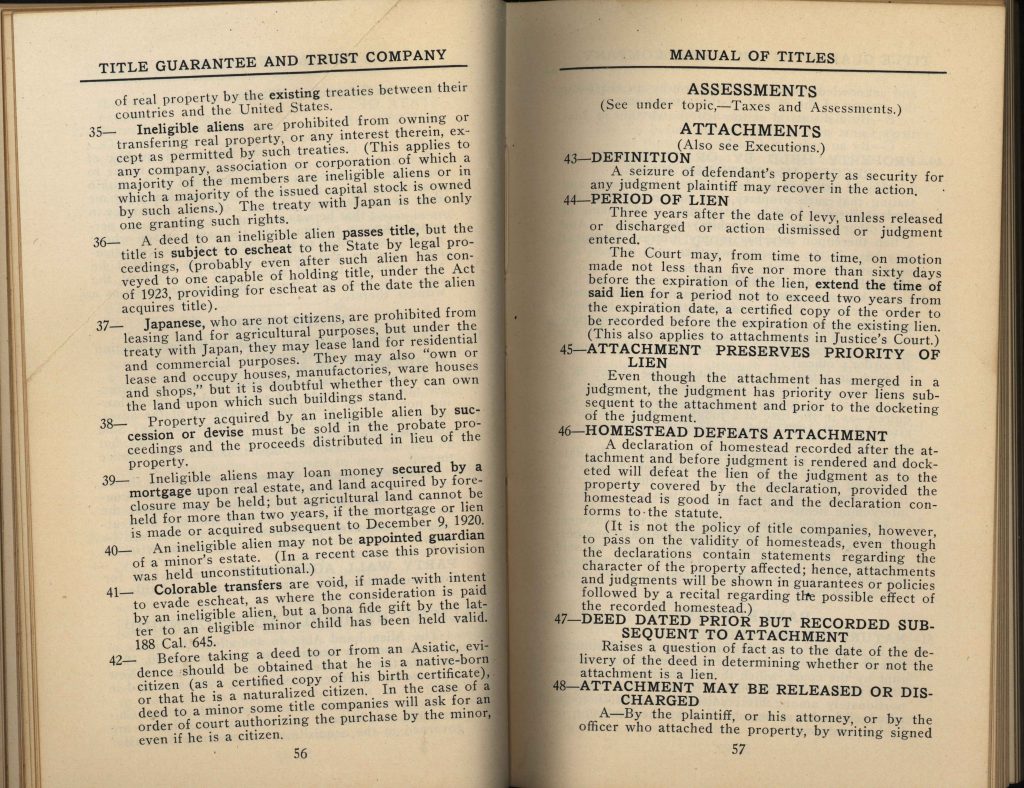
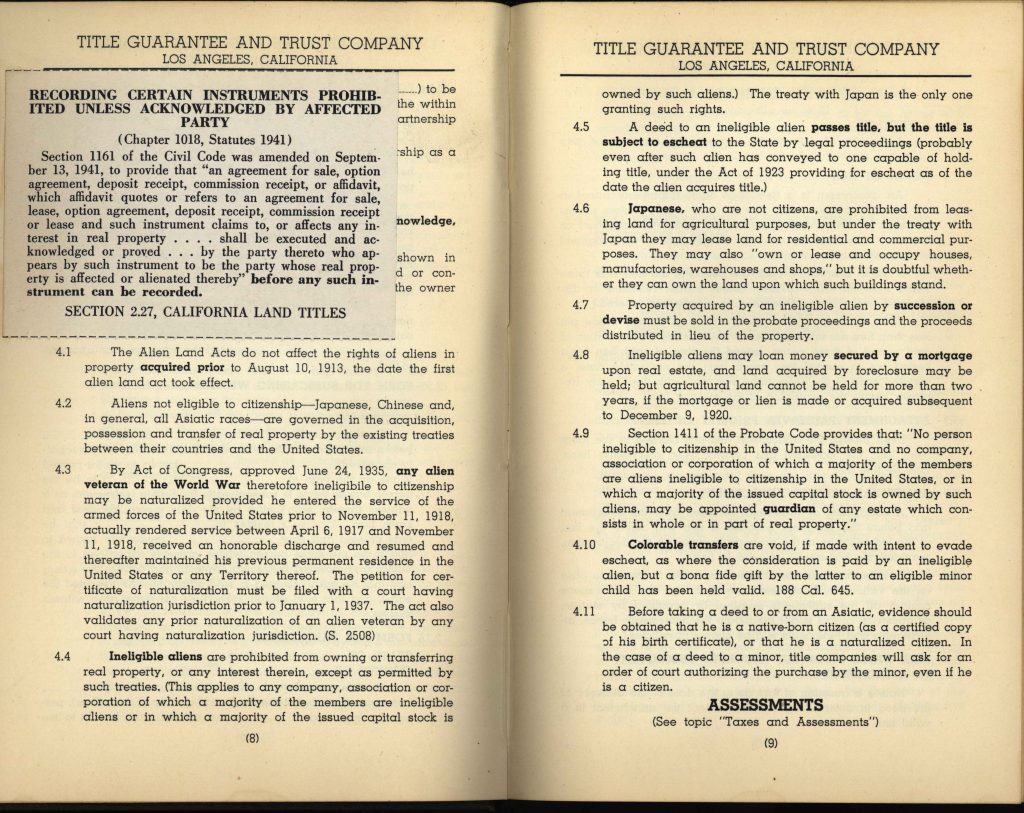
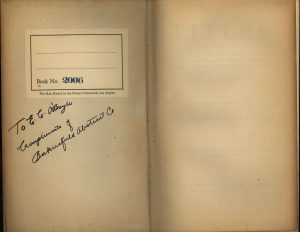
Statements that Asian residents could not use their children to hold property, unless property was given to them as a gift, and ends with, “before taking property from an Asiatic, evidence should be obtained that he is a native-born citizen or that this is a naturalized citizen.” The books were “to E. G. O’Boyle, Compliments of Bakersfield Abstract Company,” which cleared titles for real estate agents in Bakersfield.
In similar restrictions to citizenship, even American born women lost their citizenship if they married an undocumented person before 1922. This misogynistic policy created denaturalized or “non-citizen nationals.” Women, who lost their citizenship, were able to receive citizenship through the naturalization process.
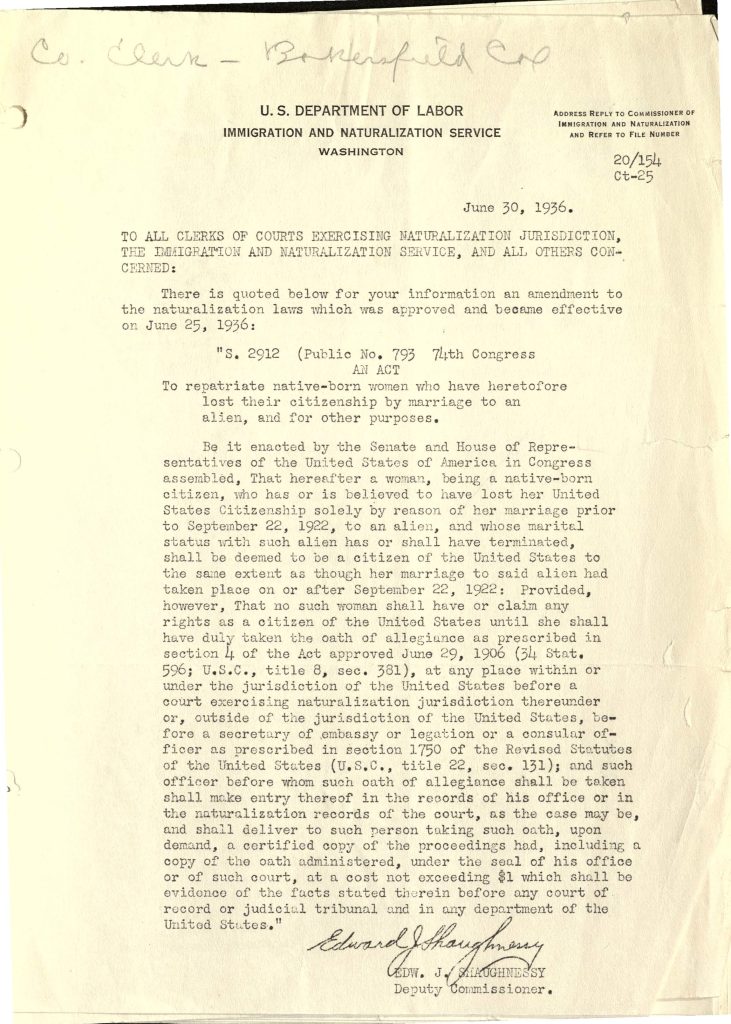
Public Law 793, June 25, 1936, eventually repatriated American born women back as citizens, with an oath of loyalty. Misogyny and gender inequality are also deeply embedded into redlining. Women as they were still subject to land exclusion laws, racial covenants, and if the property was acquired before 1917, it was presumed that a wife was not included in co-ownership of the property, unless otherwise written on the contract.
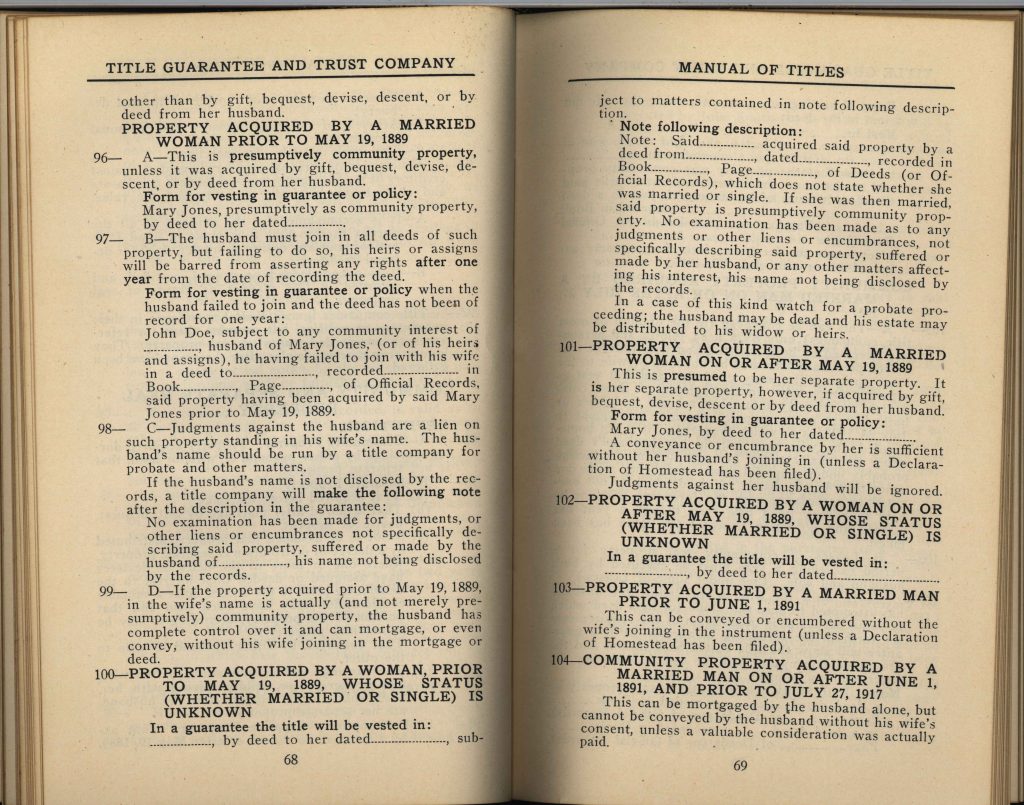
It is important to note that these limitation had an economic and community effect on legal ownership, and were detrimental to financial abilities anyone who was not a white male (redlining).