Collections & Resources

Architectural History in Kern County

Kern County has a rich heritage in the area of architecture. Since 2014, the HRC has made great efforts to preserve this heritage. This collection contains a variety of items including blueprints, tracings, photographs, watercolors, correspondence, film, and ephemera. Architects featured in this collection include Charles Biggar, Whitney Biggar, Clarence Cullimore Sr. Clarence Cullimore Jr., John Pedersen, Wilson Call, and many others.

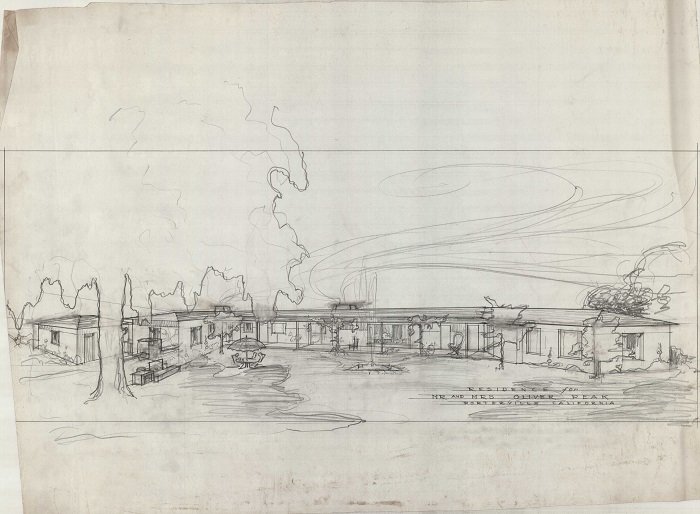
Peak Residence rendition, This hand-drawn architectural rendering presents a conceptual design for “New Fred Eller Park” in Bakersfield, California. The perspective view shows single-story structures arranged horizontally, with covered walkways and open landscaped areas in front. Trees, pathways, and low buildings suggest a mid-twentieth-century modern civic design emphasizing open space and accessibility. Architectural perspective drawings such as this were commonly used in planning proposals, municipal presentations, and funding applications to illustrate the intended character of public works projects. The clean lines and low-slung profile of the structures are consistent with post–World War II public architecture, which often favored functional, community-oriented designs. Public parks and recreational facilities in growing California cities like Bakersfield reflected broader trends in suburban expansion, civic investment, and the development of neighborhood amenities during the twentieth century. Such projects were often tied to population growth, federal or state funding programs, and urban planning initiatives aimed at community development. The drawing serves as a visual planning document, capturing an early stage in the design process before construction.

Kern County History

Kern County covers an area of almost 8200 square miles and has a rich tradition in agriculture, petroleum, aerospace, and music.

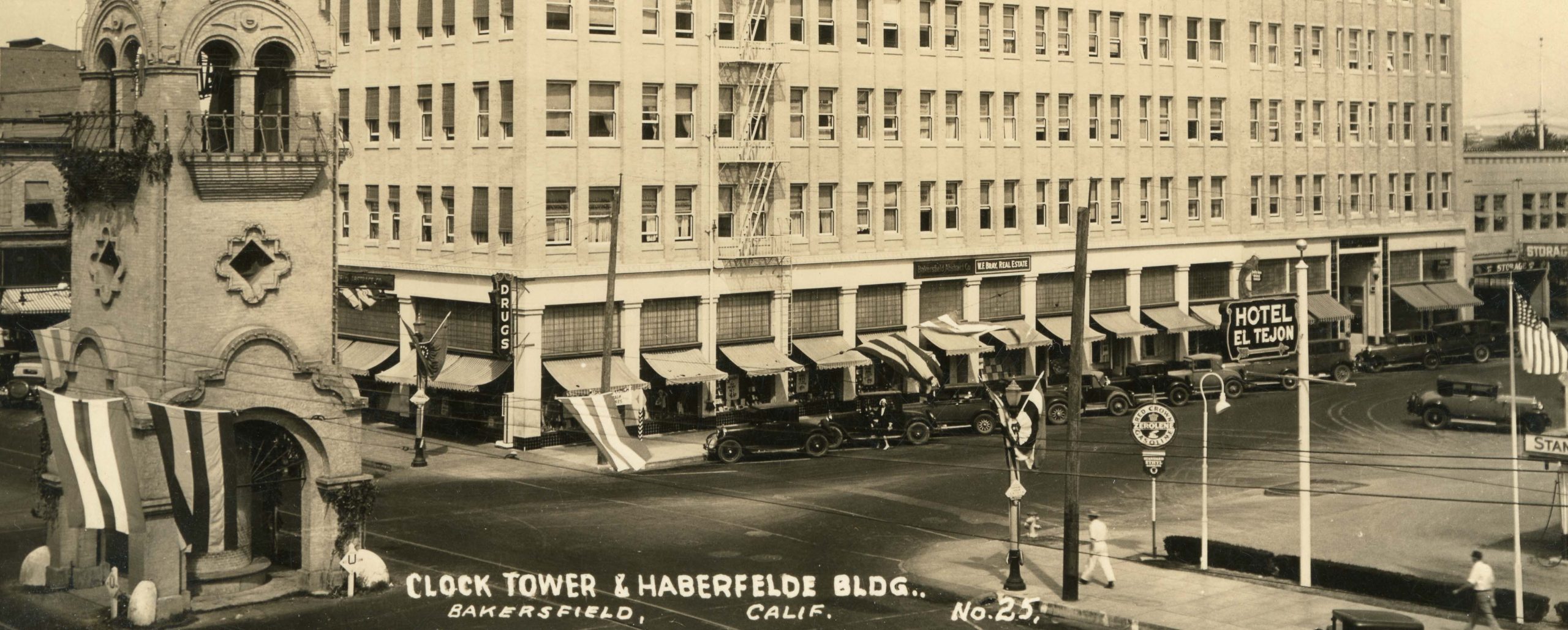
cullimore post card, This historic postcard captures a prominent downtown Bakersfield intersection featuring the Clock Tower in the foreground and the multi-story Haberfelde Building across the street. The architecture of the clock tower includes arched openings and decorative stucco detailing suggestive of Spanish Revival influence. Large American flags are displayed, possibly indicating a holiday or civic celebration. The Haberfelde Building appears as a substantial commercial structure with multiple rows of windows and ground-floor retail storefronts shaded by awnings. The visible “Hotel El Tejon” sign indicates nearby hospitality services, and the presence of multiple parked automobiles reflects the growing dominance of car culture in early twentieth-century California. Postcards such as this were commonly produced as promotional imagery, highlighting urban growth, civic pride, and commercial prosperity. The image serves as a visual record of Bakersfield’s downtown development, architectural styles, transportation patterns, and public space during a formative period in the city’s history.

University Archives

The University Archives contains the history and development of California State University, Bakersfield from 1965 to present. This collection contains a variety of items including photographs, videos, documents, books, sports memorabilia, and newspapers.

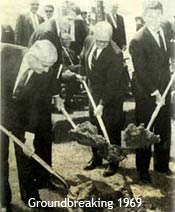
Ground Breaking Ceremony for California State College, Bakersfield, The photograph shows a group of men dressed in suits and ties participating in a ceremonial groundbreaking. Each holds a shovel positioned in freshly turned soil, a traditional gesture marking the beginning of construction for a new building or infrastructure project. Other individuals in formal attire stand nearby observing the event. Groundbreaking ceremonies were commonly held in the mid-twentieth century to mark civic, institutional, educational, religious, or commercial development projects. The formal attire and staged posture suggest this was a significant community or institutional undertaking, possibly associated with a public facility, school, church, or civic center. The year 1969 places the event within a period of urban expansion, suburban growth, and public investment across California and the United States. Such ceremonies symbolized economic development, modernization, and community progress.

Finding Aids

Online Archive of California

ArchivesSpace

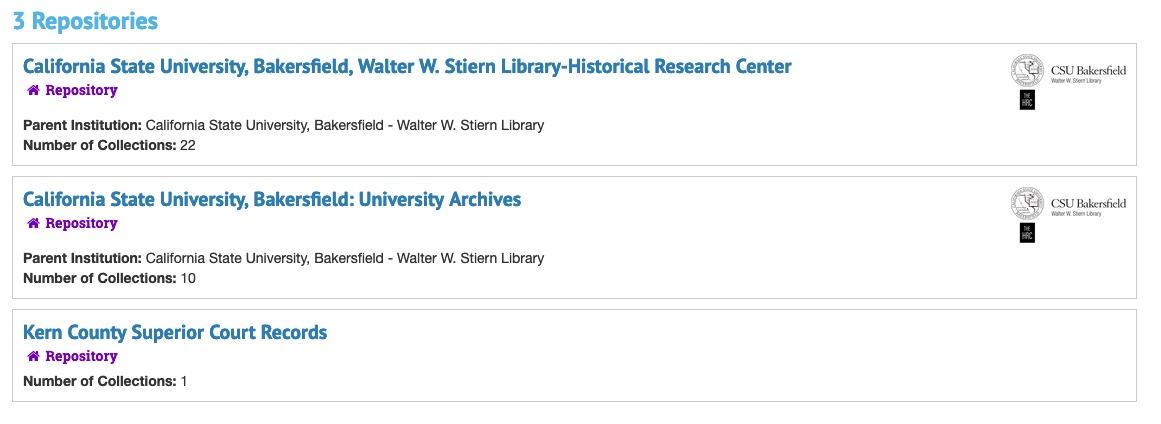
This webpage lists archival repositories housed within or affiliated with CSU Bakersfield’s Walter W. Stiern Library. The Historical Research Center (HRC) appears to hold a range of community and regional history collections (22 listed collections), likely including materials related to Kern County’s social, political, and cultural history. The University Archives (10 collections) likely preserve institutional records documenting CSU Bakersfield’s administrative history, academic programs, governance, and campus development. The Kern County Superior Court Records repository indicates archival custody or management of judicial records, which may include case files, civil proceedings, probate records, and other legal documents relevant to regional legal and social history. Such repository listings are typical of archival management platforms (e.g., ArchivesSpace), providing researchers with structured access to collection-level descriptions. The page reflects institutional efforts to organize and provide public access to historical records related to Bakersfield, Kern County, and CSU Bakersfield.


The Historical Research Center is located on the second floor of the Walter W. Stiern Library. Research inquiries should be submitted via email to archives@csub.edu. The HRC is open Monday through Friday from 8:30 am to 4:30 pm by appointment only. Hours vary during the summer and holiday breaks. For general inquiries or more information, contact us at 661.654.6127 or archives@csub.edu